For decades, OEMs treated aftersales as a support function. It was the department that kept customers happy after the real work — selling the equipment — was done. Not anymore.
Today, aftersales has become one of the most reliable growth levers in the OEM business model. Parts, service, upgrades, and support are now seen as long-term revenue streams, not cost centres. And as markets grow more competitive and volatile, the OEMs who embrace this shift are pulling ahead.
This isn’t a tactical story. It’s a strategic one.
Aftersales Has Quietly Become a Growth Channel
Modern customer relationships don’t end with delivery. In fact, that’s where the real opportunity begins.
As equipment lifecycles stretch and buying cycles slow, recurring revenue through parts and service becomes essential. Whether it’s maintenance, upgrades, or replacements, customers expect ongoing support — and they’re willing to pay for it.
The result? Leading OEMs are putting aftersales at the heart of their business strategies, recognising it as a major contributor to long-term value.
Parts Revenue Plays a Bigger Role Than Many OEMs Admit
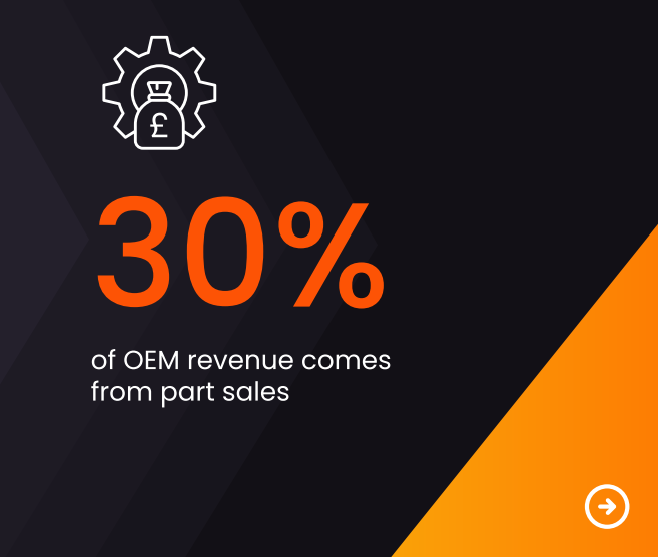
Parts and service aren’t just an add-on — they’re a core revenue stream. Over the lifecycle of a machine, a customer might spend more on replacement parts and servicing than they did on the initial purchase.
That revenue doesn’t dry up when equipment sales slow. It’s consistent, often growing, and increasingly vital in an unpredictable global market.
Many customers still turn to OEMs for genuine parts and trusted support, especially when uptime matters. But without the right infrastructure, OEMs risk losing that loyalty to faster, easier alternatives.
Margins Are Higher Than New Equipment Sales
Selling equipment is expensive. Designing, manufacturing, marketing, shipping — all before a single pound of margin is made.
Aftersales is different. Parts and servicing typically carry higher margins, benefit from predictable demand, and require far less overhead to scale. In some organisations, aftersales revenue helps subsidise innovation elsewhere.
The commercial logic is clear: aftersales is more profitable, more stable, and more scalable than many other revenue streams. But only if it's taken seriously.
The Problem: Aftersales Is Still Running on Outdated Systems
Here’s where things fall down.
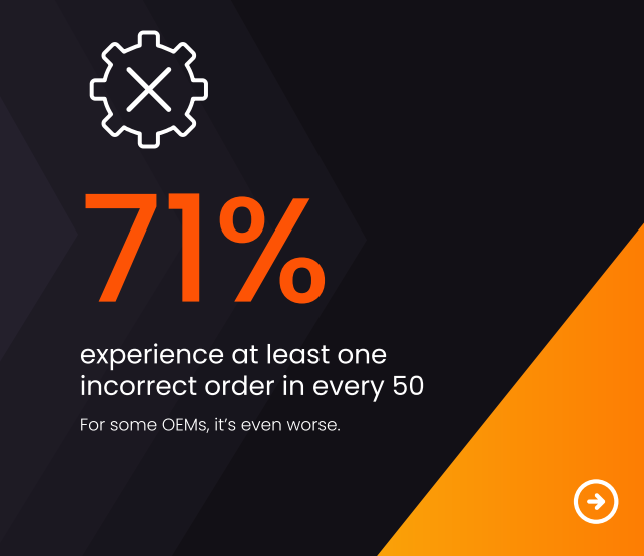
While aftersales revenue and margins rise, the systems that support it haven’t kept up. Many OEMs still use PDFs, spreadsheets, and legacy databases for parts management and service workflows.
This leads to:
-
Incorrect orders
-
Frustrated customers and dealers
-
Overloaded support teams
-
Lost revenue and growing inefficiency
The customer experience suffers. So does the bottom line.
There’s a Growing Gap Between Leaders and Everyone Else
Some OEMs are modernising their aftersales — and seeing results.
They’ve invested in scalable digital platforms, self-service tools, and smarter processes. Their customers can identify, order, and install parts without friction. Their support teams are freed up to focus on value, not admin.
Meanwhile, others are stuck in the past. Still treating aftersales as a service desk, not a strategic asset. The longer they wait, the bigger the gap becomes.
In a market where speed, reliability, and experience drive loyalty, modern aftersales is no longer a nice-to-have. It’s a competitive advantage.
That Gap Is Exactly What the Research Explores
We commissioned the OEM Aftersales Market Report to explore this shift in detail.
The report dives into:
-
How leading OEMs are responding to customer expectations
-
Where investment is going across parts, service, and support
-
The technology that’s shaping the future of aftermarket
-
The commercial risks of standing still

It’s based on real OEM activity and real industry trends — not speculation. If you’re responsible for growth, margins, or operational strategy, it’s essential reading.
Final Thoughts: Aftersales Deserves a Seat at the Table
Aftersales is no longer an afterthought. It’s a profit engine.
And it’s already powering growth for the OEMs who’ve chosen to modernise. Those that haven’t? They’re falling behind — operationally, commercially, and strategically.
If you want to see what’s changing, how leading manufacturers are responding, and where you sit in the market shift, start here.
 Partful